A promise that data can be downloaded is not enough. Procurement needs to know who can export, which scope and format are included, whether files are copied or merely linked, and whether relationships and context can be rebuilt elsewhere. Run a small exit test before contract signature; retain the sample, elapsed time and omissions as decision evidence.
1. Turn “export” into six questions
Export may mean a readable PDF, a flat CSV, structured JSON, or links pointing back to attachments. These are not equivalent. Define the required result in the request for proposal: content, metadata, relationships, permissions, comments, versions and attachments.
Ask who controls the button, whether private data needs a higher plan or approval, how long a download link remains valid, and whether the target system can ingest the result. A download function is not the same as complete portability.
- Scope: whole workspace or one project?
- Identity: are authors and timestamps retained?
- Relationships: do links and dependencies survive?
- Files: copies or links?
- Authority: who may run the export?
- Rebuild: can the target reconstruct useful work?
2. Three vendors expose three different boundaries
Notion says a page, database or workspace can be exported as PDF, HTML, or Markdown and CSV. Pages the exporter cannot access may be omitted, and an exported workspace cannot be recreated instantly by uploading the export. A large workspace export may take up to 30 hours, and its download link expires after seven days.
Slack documents public-channel message and file-link exports in JSON on Free and Pro; private channels and direct messages require Business+ or Enterprise plus the applicable request or approval. It also says Enterprise-organisation exports cannot be imported into other workspaces. Asana documents project export in JSON or CSV, with Search Views and My Tasks also exportable. These are documented examples, not a verdict on every plan or configuration.
Verify the actual account, region, settings and contract. Nawa Labs did not run exports inside vendor accounts; the feature boundaries here are vendor claims as displayed on the verification date.
3. Run the exit test while the dataset is small
Create a sandbox containing ten representative tasks or pages, two attachments, open and resolved comments, a custom field, one dependency, a guest and one private item. Export it with the real administrative role, then disconnect from the service and inspect what arrived.
Next, load the result into a safe analysis tool or candidate destination. A full migration is unnecessary to expose gaps: a simple manifest can map each test item to the file containing it or mark it missing. Record export start and completion times, package size and errors.
- 10 representative records
- Public and private permission cases
- Two comments, two attachments, one custom field
- Full export and offline inspection
- Sample import into an alternative
- Omission, timing and ownership log
4. Put the result into the contract and runbook
Turn material gaps into obligations: documented formats, covered datasets, delivery time, download-window duration, attachment handling, export before account closure and migration assistance where necessary. “Customers can download their data” is too vague when the requirement includes private conversations, activity history or object relationships.
Assign an internal owner for periodic exports, an encrypted storage location and a restore check. A recurring export is not automatically a backup or a legal-retention system; schedule and scope must match the real operational and jurisdictional need.
5. Worked decision: a 40-person team is changing work tools
If the team only needs task names, owners and dates, CSV may be sufficient. If decisions live in comments, dependencies, attachments and permissions, a successful CSV download does not prove a successful exit. Weight each category, then keep mandatory gates separate from preferences.
The outcome should be one of four explicit decisions: accept; accept with a compensating process; negotiate a contractual commitment; or reject. Portability then becomes auditable renewal evidence instead of a marketing promise.
Export acceptance scorecard
- Content completeness
- Metadata integrity
- Relationships and comments
- Actual attachments
- Permissions and scope
- Offline readability
- Sample-import success
- Time and operational cost
Sources and verification
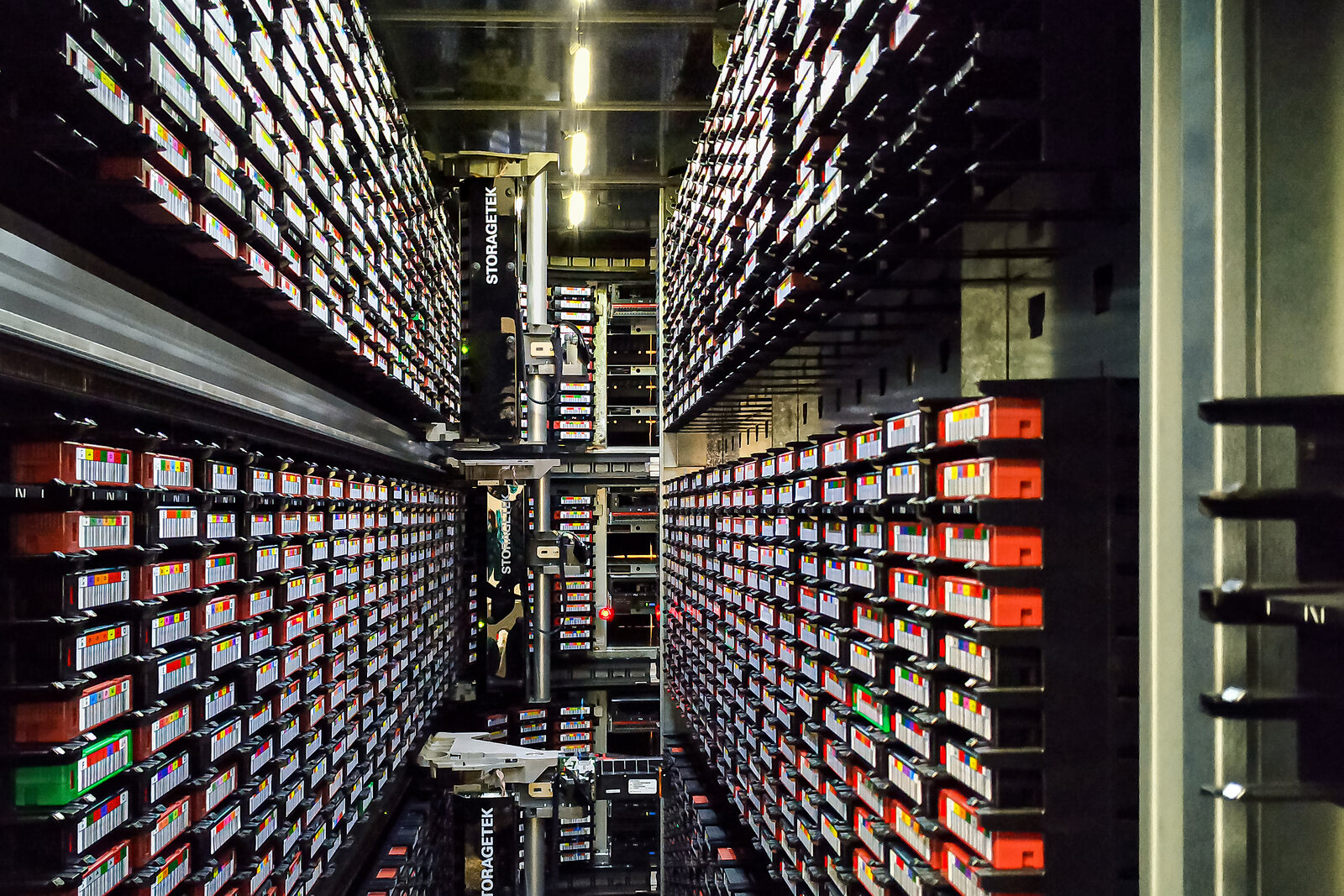
Feature claims are attributed to official vendor documentation checked 14 October 2026. The photograph is by Jorge Franganillo via Wikimedia Commons, licensed CC BY 2.0; resized and compressed without compositional alteration.
- Notion Help — Export your content
- Slack Help — Export your workspace data
- Asana Help — Project importing and exporting
- Wikimedia Commons — StorageTek tape library photograph
- Creative Commons — Attribution 2.0 licence
General procurement and operations guidance; not direct product testing, legal advice or a guarantee that every item can be restored.